Named for the Man Who Founded Lakeland
Lakeland was incorporated on January 1, 1885, founded by Abraham Munn, a Louisville, Kentucky resident who bought roughly 80 acres of downtown land in 1882 and platted the townsite in 1884. Before "Lakeland" stuck, residents floated and rejected names including Munnville, Red Bug and Rome City. Munn built the Tremont Hotel in 1885, reportedly the finest hotel in Central Florida at the time — and today's downtown historic district carries his name directly: Munn Park.
A National Register District Since 1997
The Munn Park Historic District was added to the National Register of Historic Places on November 3, 1997. It covers roughly 650 acres and contains 48 contributing historic buildings plus one contributing object, bounded by East Bay Street, North Florida Avenue, East Orange Street and East Main Street. The park itself — Munn Park — is the district's centerpiece green space; a Confederate monument erected there in 1910 was removed in 2019. Notable structures include the old City Hall and the former Coca-Cola bottling building, which today houses a fire department facility. As of early 2025, the City of Lakeland was conducting a new architectural resurvey of the Dixieland and Munn Park historic districts — a sign of active, ongoing preservation attention downtown, not a neighborhood frozen in place.
What Owning or Renovating a Munn Park-Area Property Actually Involves
Buildings this age in downtown Lakeland were constructed very differently from a modern build. Original wood siding, plaster walls instead of drywall, period trim and older-generation hardware are all common — and in many cases worth setting aside for salvage rather than demolishing outright, since original material this old is part of what makes the district what it is. A renovation debris load from a Munn Park-area property is often more varied than a comparable newer-home remodel because of it: plaster and lath instead of drywall, old-growth lumber, and sometimes fixtures worth keeping rather than tossing.
Lake Mirror and the Surrounding Civic Core
Just beyond the district's own boundary sits Lake Mirror, Lakeland's signature downtown lake, ringed by a promenade and civic buildings and surrounded by developed park spaces including Barnett Family Park, Hollis Garden and Allen Kryger Park. Together with Munn Park, this civic core anchors Lakeland's historic downtown — a genuinely active neighborhood of offices, storefronts and residences, not a museum piece, and one where cleanout and renovation work happens regularly as older buildings turn over.
Working on a Downtown Historic Street
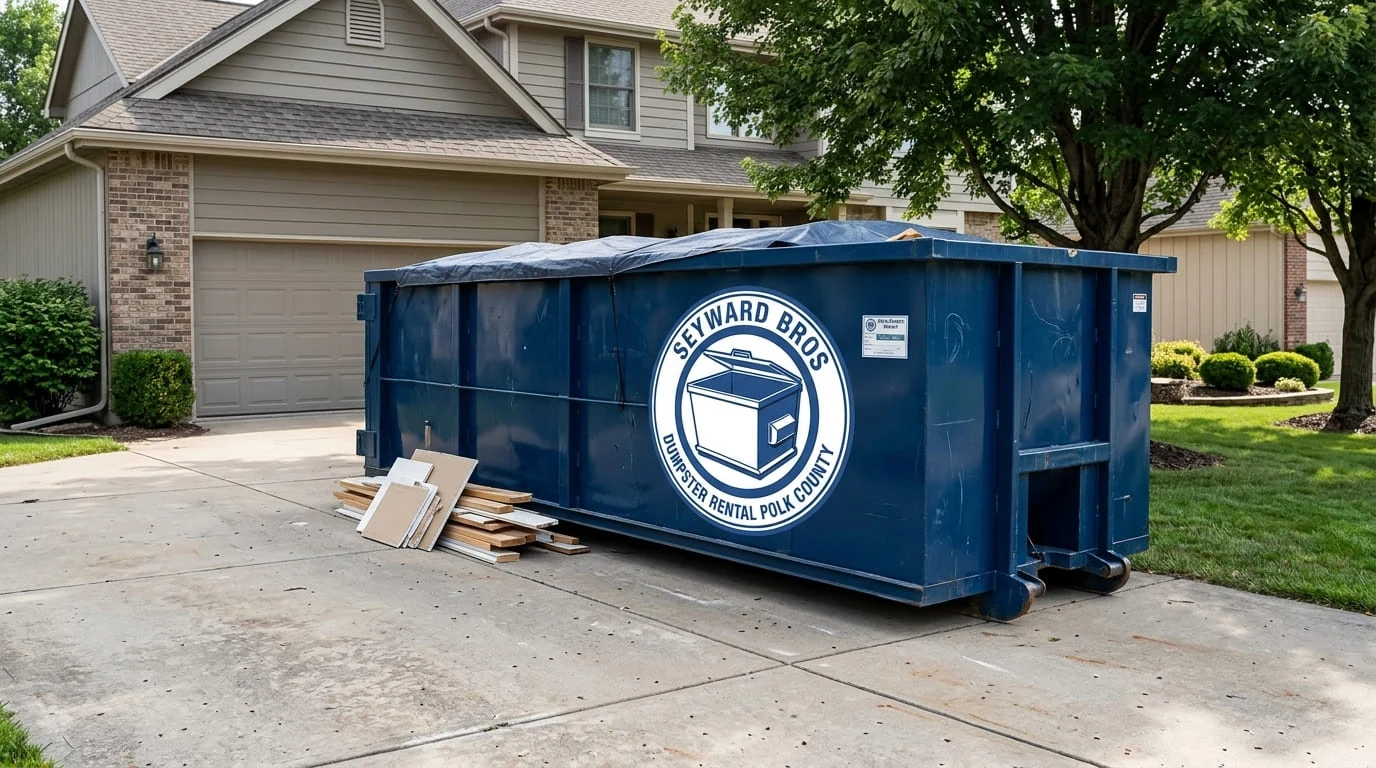
Streets around Munn Park were laid out well over a century ago, long before a modern roll-off delivery truck was part of anyone's planning. Parking downtown can be tighter than in a newer Lakeland subdivision, and some blocks see steady foot and business traffic that a driveway placement in a residential neighborhood simply doesn't. We plan around exactly that — a straightforward conversation up front about where on the lot, curb or loading area the container should actually sit.
Right-of-Way Placement and the City's 24-Hour Rule
If a container needs to sit on a public street rather than entirely on private property, the City of Lakeland's own Non-Utility Right-of-Way Permit process applies — administered through the Engineering Division of Public Works. The permit itself is a revocable license for permissive use only, not a property right, and the city reserves the right to require removal of a permitted roll-off container from an on-street parking space with 24 hours' notice. That's a real, specific city rule worth knowing before you plan a downtown placement — a container kept entirely on your own driveway or private lot generally doesn't trigger it.
City of Lakeland Right-of-Way Permitting
- Non-Utility Right-of-Way Permit — Engineering Division, Public Works
- 24-hour removal notice rule applies to street-placed roll-off containers
- Contact: David Stroud, Engineering Technician — (863) 834-8437
Sizing a Container for a Munn Park-Area Project
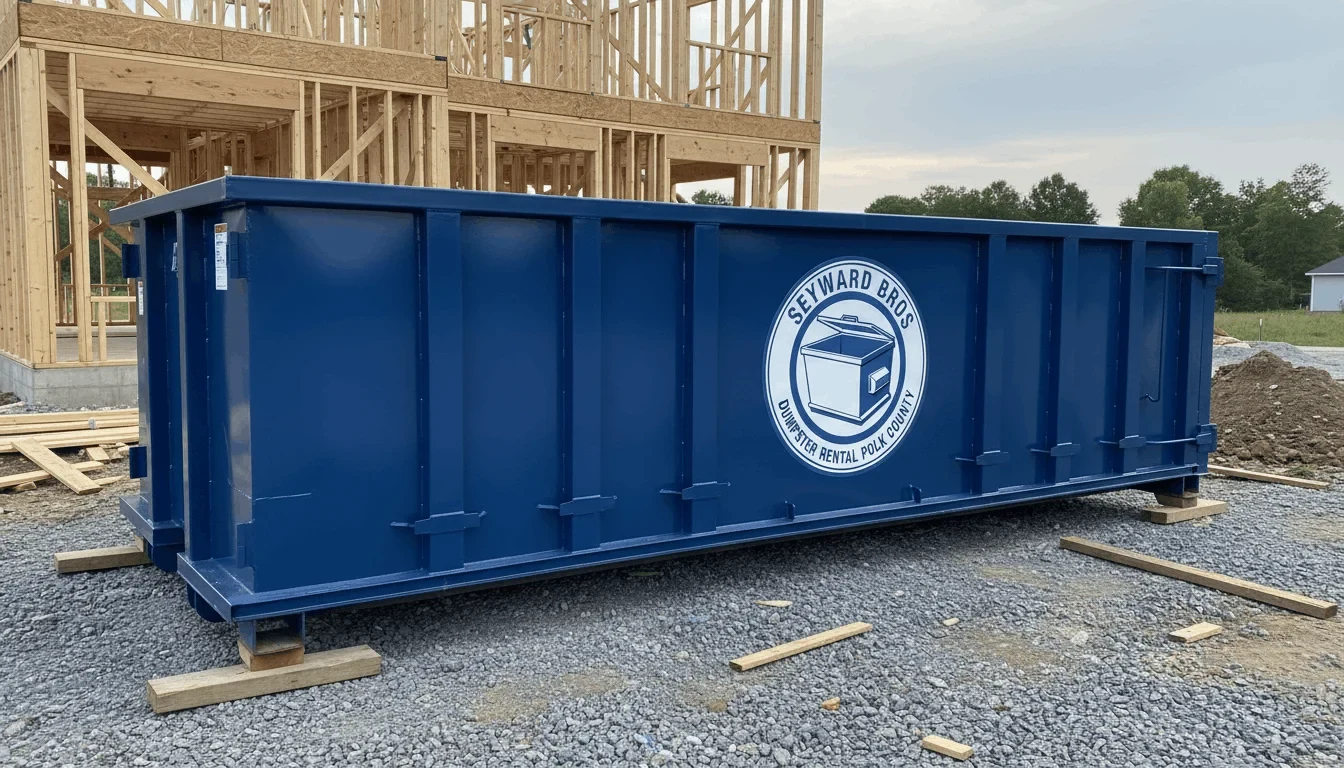
Most single-room renovations or partial cleanouts near the district fit a 15 or 20 yard container. A larger whole-building renovation, or a project involving real structural or plaster-and-lath demolition, often calls for a 20 or 30 yard. Whatever the scope, our pricing stays flat-rate — the size you need, the debris type, and how long you keep the container are the only variables. Tell us the address and we'll talk through both sizing and placement together — narrow downtown streets and a right-sized container go hand in hand.